
fe. fairway enduranceBefore your round

GOLF FITNESS, FUELING & PREPARATION

Feel good on
the 18th.

A better round starts before the first tee. Build your stamina, fuel your body and keep your head in the game—all the way home.

Explore the guides

Less fading on the back nine. More enjoying the game.

Brought to you by Foot Traffic Coaching

Foot Traffic Coaching helps everyday athletes build fitness and prepare for endurance events. Led by coach Rob Dallimore, Fairway Endurance brings his experience in coaching triathlon to the stamina, fueling and preparation needed for a comfortable round of golf.

Golfer walking a coastal fairway with a push trolley
THE GOALFinish with something
left in the tank.

YOUR GAME, FROM THE GROUND UP

Three ways to
finish strong.

You don’t need to train like a tour pro. Start with habits that make your usual round feel easier.

01 / FITNESS

Train for the walk.
Prepare for the swing.

Start from what you can comfortably do now. Consistent, manageable sessions beat an exhausting workout that leaves you sore for golf.

START HEREAdd two comfortable walks to your week.

Make time on your feet feel easier

If you’re starting out, try 15–30 minutes at a pace where you can talk in full sentences. Once that feels comfortable, extend one walk by 5–10 minutes. Build towards the time and terrain of your usual course; break longer walks into sections if needed.

Add gentle hills gradually. Wearing a weighted backpack can help with the demands of a round in which you are pushing a trundler, while you build fitness. You don’t have to carry your clubs to benefit from walking.

A simple strength session

Twice a week, on separate days, try one or two easy sets of each movement. Rest as needed and finish each set feeling you could do a few more repetitions.

  • Chair sit-to-stand: 8–12 repetitions, using your hands for help if needed.
  • Low step-up: 6–8 each leg, with a rail for support.
  • Standing calf raise: 10–15, holding a stable surface.
  • Wall push-up: 8–12, keeping your body comfortably aligned.
  • Resistance-band row: 8–12 with a secure anchor and light resistance.
  • Supported single-leg balance: 15–20 seconds each side beside a counter.

Keep the movements controlled and comfortable. Add repetitions before adding load, and avoid a new or hard leg session the day before golf.

Your 8-minute first-tee warm-up
  1. 2 minutes: brisk, comfortable walking.
  2. 3 minutes: gentle shoulder circles, small trunk turns, supported hip movements and easy sit-to-stands.
  3. 3 minutes: practice swings, starting slow and short, then building gradually to your normal swing.

Move within your comfortable range. Don’t force a stretch or chase maximum speed before you feel ready.
Build gradually. Stop exercises that cause pain; get individual guidance for an injury or a health condition that affects exercise.

02 / FUEL YOUR ROUND

Pack your snacks.
Protect your back nine.

Think ahead so food and water are easy to reach. A four-hour round is a long time to rely on breakfast alone.

BEFORE THE TEE

Start fed.

Have a familiar meal a few hours before golf: porridge with yoghurt and fruit, or toast and eggs. For an early start, a smaller breakfast and packed snack may suit you better.

Drink normally beforehand. Arrive with water and know where you can refill.

THROUGH THE ROUND

Top up regularly.

Use a simple reminder every few holes to check hunger and thirst. Pack a banana, a sandwich or wrap, and a snack bar. Eat manageable portions rather than waiting until you feel drained.

Keep water accessible and drink to thirst. In heat, plan extra refill stops and shade breaks. A sports drink can be convenient for fluid and carbohydrate during a long, sweaty round; it isn’t essential for everyone.

AFTER THE LAST PUTT

Recover simply.

Enjoy a substantial post-round meal with carbohydrate and protein, such as chicken pasta or a salad with chicken, beans and potatoes. Continue drinking water as needed, or an electrolyte drink if you’ve been sweating heavily. Keep alcohol to a minimum, as it can interfere with recovery.

If another round is coming tomorrow, make time for food, rest and sleep instead of relying on a supplement.

Food and fluid needs vary with weather, walking effort, body size and medical needs. Test your choices in a casual round; there is no single golf-specific target that suits everyone.

03 / PLAY SMARTER

A clear head.
A sensible next shot.

Fitness supports your game. Good decisions help you use the energy you have.

BACK-NINE RESETDrink. Check your energy.
Choose the simple shot.
01

Keep a comfortable walking pace

Allow enough time before your tee time so you don’t start rushed. Between shots, walk at a steady pace and relax your shoulders. Use shade and a trolley when they help conserve energy.

02

Choose targets with room for error

When your strike is inconsistent, aim for the broad part of the fairway or middle of the green. Choose a club that gives you a comfortable swing and consider a lay-up when trouble outweighs the reward.

03

Use the same short routine

Assess the lie and conditions, choose your target, take one comfortable rehearsal and commit. A familiar routine gives your attention somewhere useful to go after a poor shot.

04

Notice when fatigue changes your game

If your legs feel heavy or concentration slips, check food, water and pace. Avoid trying to fix tiredness by swinging harder. Choose a simpler shot and reset for the next hole.

05

Review one thing after the round

Note when energy dipped, what you ate and drank, and one decision you’d repeat or change. Adjust one habit next time so you can tell what helped.

BEFORE YOU LEAVE HOME

What to bring and do
before your round.

A little preparation makes a long walk more enjoyable.

THE PERSON BEHIND FAIRWAY ENDURANCE

A new game.
A familiar drive.

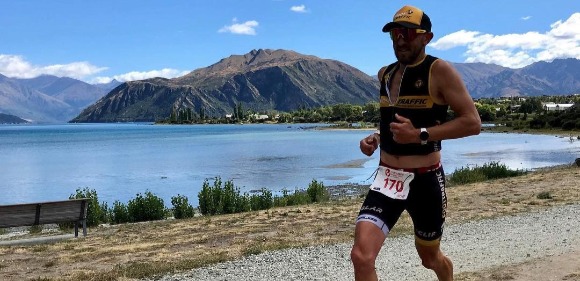
Rob Dallimore running in a triathlon beside a lake and mountains
Rob Dallimore, in his triathlon racing days.

Rob Dallimore
Founder of Foot Traffic Coaching

EXPERIENCE THAT TRAVELSOver 30 years in competitive triathlon.
Professional coaching since 2011.

I’ve been a competitive triathlete for more than 30 years and a professional triathlon coach since 2011. Through Foot Traffic Coaching, I’ve helped athletes build the fitness, confidence and skills they need to perform well in swimming, cycling and running.

Long-term issues with cardiac arrhythmia eventually led me to step away from competitive racing, but my desire to learn, improve and compete remained. So I headed in a completely new direction: I bought my first set of clubs and took up golf.

I quickly discovered how much I had to learn. Alongside the challenge of developing a swing, though, I began recognising connections with the sport I’d spent decades racing and coaching. Preparation, pacing and fueling all matter and fatigue can change how you move, concentrate and make decisions.

Golf places different demands on the body, but staying on your feet for several hours and maintaining focus through the final holes requires more than good technique. That got me thinking about how my endurance coaching experience could help everyday golfers feel better throughout a round and finish with energy to spare.

Fairway Endurance grew from that idea. It brings together my years of coaching and my fresh perspective as a golfer to offer practical guidance on fitness, fueling and preparation. I’m still working on my swing, but helping people build the fitness to enjoy their sport is something I’ve spent years doing.

Further reading

These guides combine general exercise principles with practical round-day suggestions. Golf nutrition research is still developing; use the ideas as a starting point and adapt them to your needs.

Golf and health: international consensusAIS hydration educationReview of nutrition and golf performance